Project Time: Presentation Slideshow
HW: Complete Solo Upcycle Project.
CW: Complete Upcycle Project Presentation Slideshow.
DN: What is the main material of your project made from?
QUICK VIEW
HW: Complete Solo Upcycle Project.
CW: Complete Upcycle Project Presentation Slideshow.
DN: What is the main material of your project made from?
Resources
LESSON OUTLINE
5min Students complete the Do Now.
10min Photosynthesis & Cellular Respiration Quiz
5min Teacher explains assignments.
20-25min ReUse Project Presentation Slideshow. Students use resources to address questions following the simplified quick presentation slide style (Bad Example, Good Example 1, & Good Example 2). Teacher checks slides and offers suggestions.
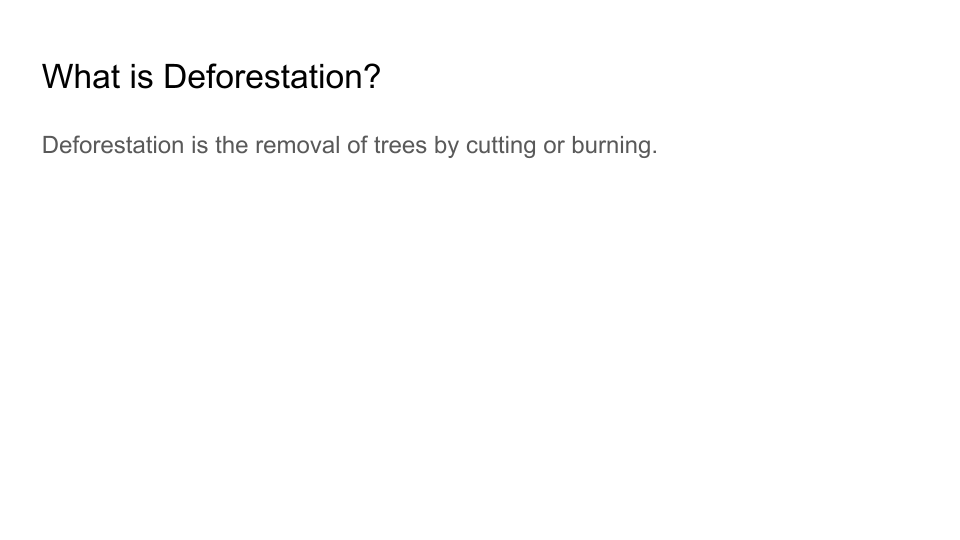
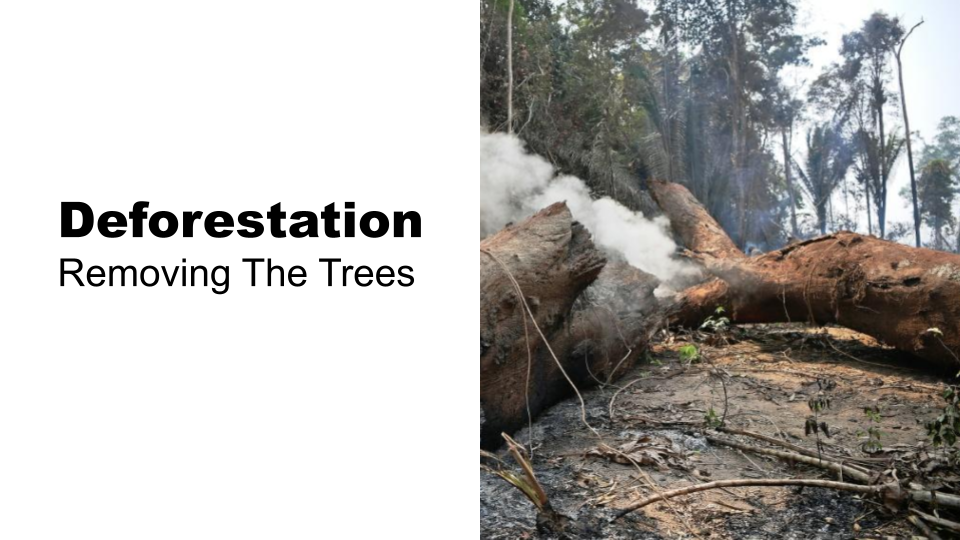
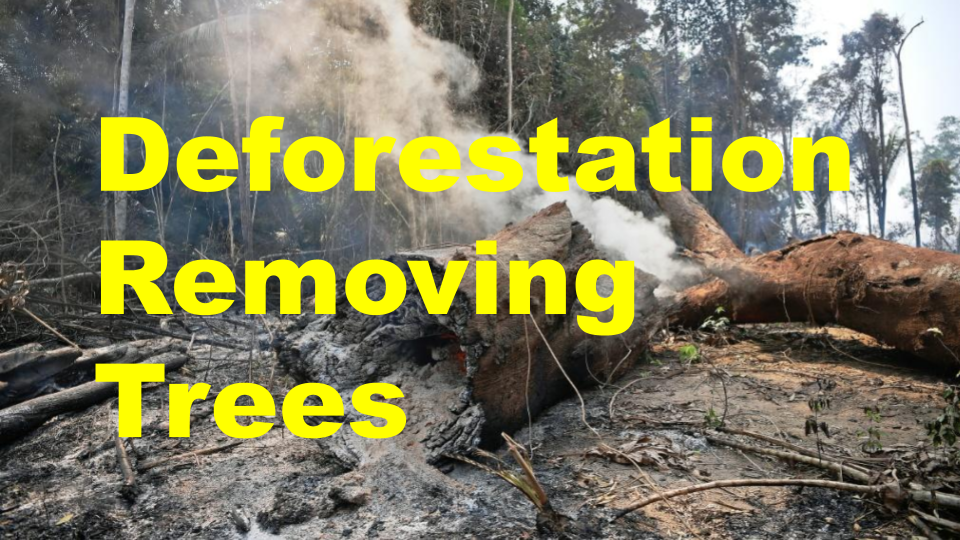
The following questions need to be answered in your presentation/slideshow. Make sure to follow the rules for a presentation.
Environmental Impact of Plastic, Cardboard, Fabrics, and Rubber
1. Title slide (brand name of your product).
2. How much plastic/cardboard/fabric is made/used/thrown away every year?*
3. What is the natural resource used to make plastic/cardboard/fabric/rubber?
(Example: Glass is made from sand. Sand is the resource.)
4. Is the natural resource renewable or nonrenewable?
5. How much of that natural resource is used a year?*
6. How much water is used to make plastic/cardboard/fabric/rubber?*
7. How does getting/using/making/disposing of plastic/cardboard/fabric/rubber directly or indirectly contribute to the death/illness of living organisms)?*
* Requires numbers and a link to your resource.
8. “What's the solution?” (This is just a set up for your product.)
9. Product (Include picture of your project item.)
10. Cost & Selling Price
11. Final Message
Rules for Slides
- BIG Sans Serif Fonts (30+)
- NO Sentences, NO Paragraphs, NO Bullet Points
- ONE FACT + ONE PIC per slide. (If the picture is that important, it should have its own slide.)
- URL should be tiny at the bottom
- NO crazy colors. NO animations.
Notes
[1] Styrofoam is a type of plastic. [2] Cardboard is a type of paper. [3] There are two types of fabrics, natural and synthetic. Synthetic fabrics like polyester are made from plastic. [4] The term “effluent” means liquid waste/wastewater [5] One cubic meter of liquid (1 m³ or 1 m^3) is 1000L or 264 gallons. [6] Natural Rubber Latex, NRL, and Latex are the same thing, which are different from Natural Rubber. [7] Many things that are ‘rubber’ or ‘Natural Rubber’ are vulcanized (heat + sulfur) to become stronger and more durable (such as rubber bouncy balls, rubber mats, or rubber tires).
USE ONLY THESE LINKS
Water
https://www.watercalculator.org/water-use/the-hidden-water-in-everyday-products/
http://teacher.depaul.edu/MathConnectResources/All%20Data%20pdf/Chicago%20Water%20Usage%20Facts.pdf
https://www.uvm.edu/~wbowden/Teaching/xInvited%20lectures/Water%20trivia%20%28EPA%29.pdf
Cotton
https://www.theguardian.com/sustainable-business/sustainable-fashion-blog/2014/oct/01/cotton-production-linked-to-images-of-the-dried-up-aral-sea-basin
https://www.sustainyourstyle.org/old-environmental-impacts
https://www.eurekalert.org/pub_releases/2018-08/nuos-cfa072618.php
https://www.wpr.org/despite-efforts-head-nutrient-runoff-dead-zones-growing-problem
https://www.nwf.org/Magazines/National-Wildlife/2006/Cotton-and-Pesticides
Plastic
https://science.howstuffworks.com/plastic.htm
https://www.plasticseurope.org/en/about-plastics/what-are-plastics/how-plastics-are-made
https://www.earthday.org/2018/04/05/fact-sheet-plastics-in-the-ocean/
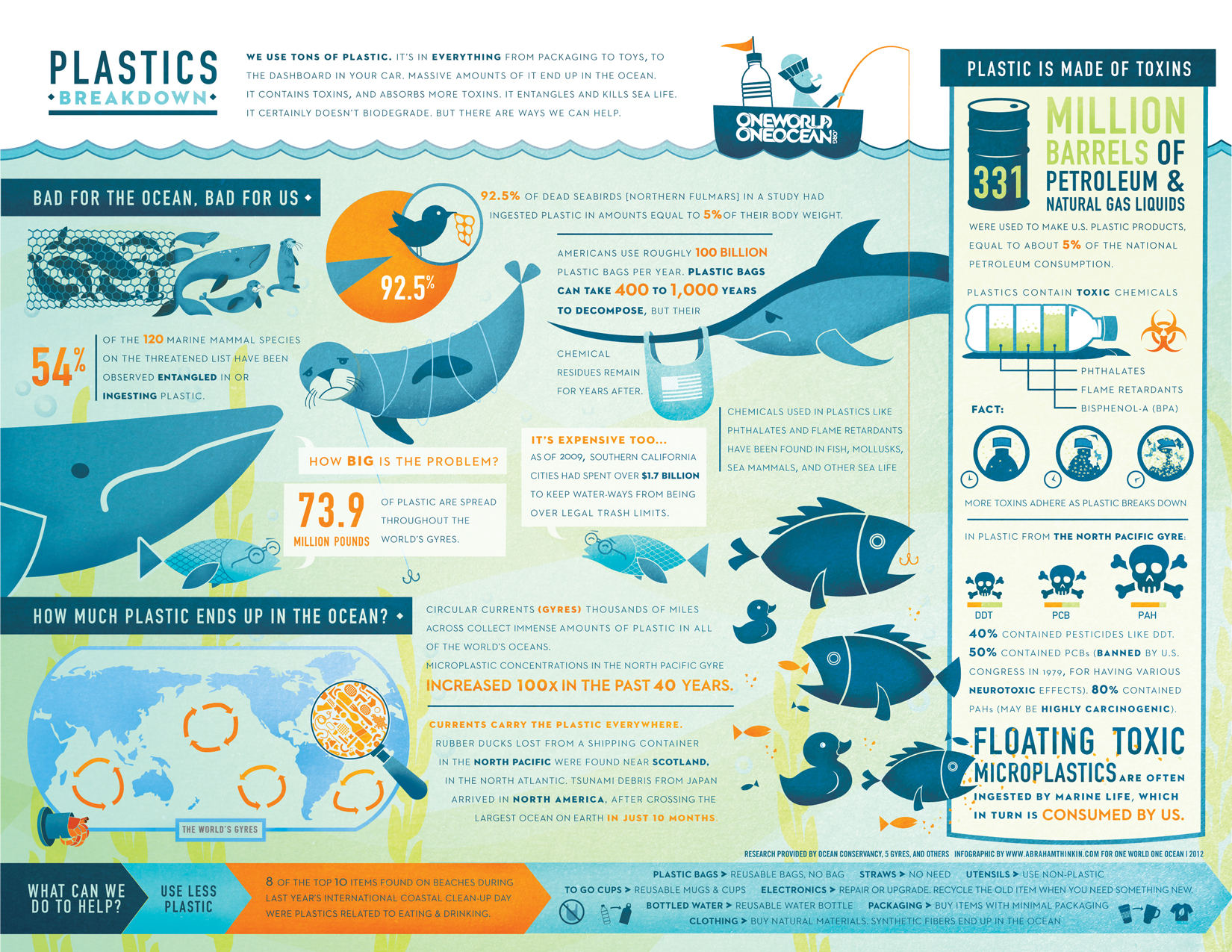
http://www.oneworldoneocean.com/images/blog/OWOO_PlasticsInfographic_2012_b.jpg
Paper
https://www.sierraclub.org/sierra/2014-4-july-august/ask-mr-green/how-much-paper-does-one-tree-produce
https://www.worldatlas.com/articles/how-many-trees-does-it-take-to-make-1-ton-of-paper.html
https://www.ran.org/the-understory/how_many_trees_are_cut_down_every_year/
https://www.triplepundit.com/story/2013/deforestation-and-role-paper-products/59071
https://rainforests.mongabay.com/0807a.htm
Rubber
https://www.ace-laboratories.com/latex-vs-rubber/ https://www.sciencedirect.com/science/article/abs/pii/S0045653523017794 https://wits.worldbank.org/trade/comtrade/en/country/ALL/year/2021/tradeflow/Exports/partner/WLD/product/400110
https://www.bbc.com/future/article/20210308-rubber-the-wonder-material-we-are-running-out-of
https://www.azocleantech.com/article.aspx?ArticleID=1227https://www.nature.com/articles/s41586-023-06642-z
5min Collect materials. Clean up. Wrap up.
Natural Resources: SMA (Day 2 of 2)
HW: Turn in Natural Resources SMA video clips.
CW: Complete Natural Resources SMA.
DN: Take out SMA materials (from yesterday) and technology.
Reminders: GROUP PROJECTS ARE DUE TOMORROW!!! NO LATE GROUP PROJECTS. NO EXCEPTIONS. PRODUCT IN PERSON AND COMMERCIAL VIA SCHOOLOGY.
QUICK VIEW
HW: Turn in Natural Resources SMA video clips.
CW: Complete Natural Resources SMA.
DN: Take out SMA materials (from yesterday) and technology.
Reminders: GROUP PROJECTS ARE DUE TOMORROW!!! NO LATE GROUP PROJECTS. NO EXCEPTIONS. PRODUCT IN PERSON AND COMMERCIAL VIA SCHOOLOGY.
RESOURCES
LESSON OUTLINE
5min Students complete the Do Now.
5min Teacher organizes students for access to technology.
5min Natural ResourcesStop Motion Animations. Teacher explains how to complete each animation.
Fossil Fuels SMA
- Title. (5pics)
- Dead plants and animals fall and sink into the swamp. (12+pics)
- Layer upon layer upon layer of sediments cover and bury the swamp. (12+pics)
- The buried material turns into coal/oil. (5+pics)
Groundwater SMA
- Title (5pics)
- Rain falls onto a field. (5+pics)
- Water flows deep into the ground and collects at the bottom. (7+pics)
- More Rain falls onto a field. (5+pics)
- Water flows deep into the ground and raises the groundwater level. (7+pics)
- More Rain falls onto a field. (5+pics)
- Water flows deep into the ground and raises the groundwater level. (7+pics)
Soil SMA
- Title (5pics)
- Weathering and erosions turn part of a rock into sediments. (5+pics)
- Lichen and Moss start growing on rock. (7+pics)
- Dead lichen and moss mix into the sediments. (7+pics)
- Bird poop falls onto and mixes into the sediments. (7+pics)
25min Students film stop motion animations.
5min Students make edits to stop motion animations before turning them in via google classroom.
5min Collect materials. Clean up. Wrap up.
Natural Resources: SMA (Day 1 of 2)
HW: (Optional) BYOT - Bring your own technology. Have the Stop Motion Studio App already installed.
CW: Complete parts for stop motion animation.
DN: Where are fossil fuels made?
Reminders: Group projects due on Wednesday. Don’t forget your photo documentation.
QUICK VIEW
HW: (Optional) BYOT - Bring your own technology. Have the Stop Motion Studio App already installed.
CW: Complete parts for stop motion animation.
DN: Where are fossil fuels made?
Reminders: Group projects due on Wednesday. Don’t forget your photo documentation.
RESOURCES
LESSON OUTLINE
5min Students complete the Do Now.
5min Teacher organizes students for access to technology.
5min Natural Resources Stop Motion Animations. Teacher explains how to complete each animation.
Fossil Fuels SMA
- Title. (5pics)
- Dead plants and animals fall and sink into the swamp. (12+pics)
- Layer upon layer upon layer of sediments cover and bury the swamp. (12+pics)
- The buried material turns into coal/oil. (5+pics)
Groundwater SMA
- Title (5pics)
- Rain falls onto a field. (5+pics)
- Water flows deep into the ground and collects at the bottom. (7+pics)
- More Rain falls onto a field. (5+pics)
- Water flows deep into the ground and raises the groundwater level. (7+pics)
- More Rain falls onto a field. (5+pics)
- Water flows deep into the ground and raises the groundwater level. (7+pics)
Soil SMA
- Title (5pics)
- Weathering and erosions turn part of a rock into sediments. (5+pics)
- Lichen and Moss start growing on rock. (7+pics)
- Dead lichen and moss mix into the sediments. (7+pics)
- Bird poop falls onto and mixes into the sediments. (7+pics)
20min Students complete making the parts for their stop motion animations.
10min Students start on their stop motion animations.
5min Collect materials. Clean up. Wrap up.
Natural Resources: Ketchup Day
HW: Work on Project.
DN: Take a chromebook and finish slideshows.
Reminders: Upcycling Project due soon. Don’t forget photo documentation.
QUICK VIEW
HW: Work on Project.
DN: Take a chromebook and finish slideshows.
Reminders: Upcycling Project due soon. Don’t forget photo documentation.
Resources
LESSON OUTLINE
5min Students complete the Do Now.
10min Feedback
15min Edit and improve slideshow.
15min Presentations
5min Collect materials. Clean up. Wrap up.
Natural Resources: Deforestation
CW/HW: Deforestation Presentation Slideshow
DN: What is deforestations?
Reminders: Upcycling Projects need photo documentation.
QUICK VIEW
CW/HW: Deforestation Presentation Slideshow
DN: What is deforestations?
Reminders: Upcycling Projects need photo documentation.
RESOURCES
LESSON OUTLINE
5min Students complete the Do Now.
10min Updates & Reminders on: [1] how to take pictures of your plants that’ll be sprouting soon; [2] taking photo documentation for ReUse project; and[3] how to make good slideshows for presentations (Bad Example, Good Example 1, & Good Example 2).



5min Deforestation Presentation Slideshow Instructions.
Slide 1: Title & Your Name
Slide 2-3: Benefits of Trees
Slide 4: Define Deforestation (In your own words.)
Slide 5: Where is deforestation happening?
Slide 6-7: Why is deforestation happening? (NUMBERS and it isn't because we want the trees.)
Slide 8: How much land is being used for meat? How is this inefficient use of our resources?
Slide 9: More facts. (NUMBERS)
Slide 10-11: How can people help prevent deforestation and why does it matter?
15-20min Deforestation Presentation Slideshow Completions. Students research deforestation using the provided video resources then complete the slideshow.
5min Collect materials. Clean up. Wrap up.